
EMPD Clinical Trials

ClinicalTrials.gov is the largest clinical trials registry in the world, but not a totally complete one. Trials that run entirely inside one country are often registered only in that country's national registry and may not appear there at all. That gap matters more for EMPD than for most cancers, since a substantial share of the research is done in Japan, China, and South Korea. The registries below are the ones worth checking, though EMPD is rare enough that some may return nothing.
US Clinical Trials registry
ClinicalTrials.gov is the largest Clinical Trials registry and includes trials both in the United States and elsewhere.
EU Clinical Trials Information System (CTIS)
The European Union register of trials conducted in EU member states.
Japan Registry of Clinical Trials (jRCT)
Important for EMPD specifically, because a substantial share of EMPD research is conducted in Japan. The trial records themselves are largely in Japanese.
Readers who do not read Japanese may do better starting at the Japan Primary Registry Network portal, which searches jRCT and other national registries at once and is available in English: rctportal.mhlw.go.jp/en
Chinese Clinical Trial Registry (ChiCTR)
Chinese EMPD trials are often registered here rather than on ClinicalTrials.gov. The site has an English version.
ISRCTN Registry
A registry used widely in the United Kingdom and elsewhere.
Australian New Zealand Clinical Trials Registry (ANZCTR)
Covers studies in Australia and New Zealand.
Clinical Research Information Service (CRIS)
The South Korean national registry. Use the English toggle at the top of the page.
Notes on searching
Most of the links above jump straight to results. Where you type the term yourself, start with Paget. It is the broadest term and catches records that never use "extramammary" at all, such as a trial titled "Paget disease of the vulva." If a search comes back empty, try extramammary, extra-mammary, and Paget's as separate searches. These registries match exact words and will not expand a term for you.
A "Paget" search also returns two unrelated diseases: Paget's disease of bone, a bone disorder that will usually be most of your results, and mammary Paget's disease, which affects the nipple and breast. The fastest way to tell them apart is body site. EMPD appears on the vulva, scrotum, penis, perianal area, groin, and sometimes the armpit. If a trial names the nipple, breast, or skeleton, it’s likely not EMPD.
Studies and trials of interest
New Study Uses Fluorescent Dye to Improve EMPD Surgery
A phase IV clinical trial, now open to participants, is testing whether a special dye called fluorescein sodium can help surgeons more precisely identify and remove cancerous tissue during surgery for extramammary Paget’s disease (EMPD) of the vulva.
Currently, most surgeons rely on standard lighting—but EMPD often spreads in irregular patterns that are difficult to see with the naked eye. Fluorescein sodium, delivered by IV, glows under ultraviolet light and may help highlight hidden cancerous areas.
The study is led by Dr. Mario Leitao at Memorial Sloan Kettering Cancer Center in New York.
Learn more and check eligibility here.
The Transformative Rare Cancer (TRACER) Initiative
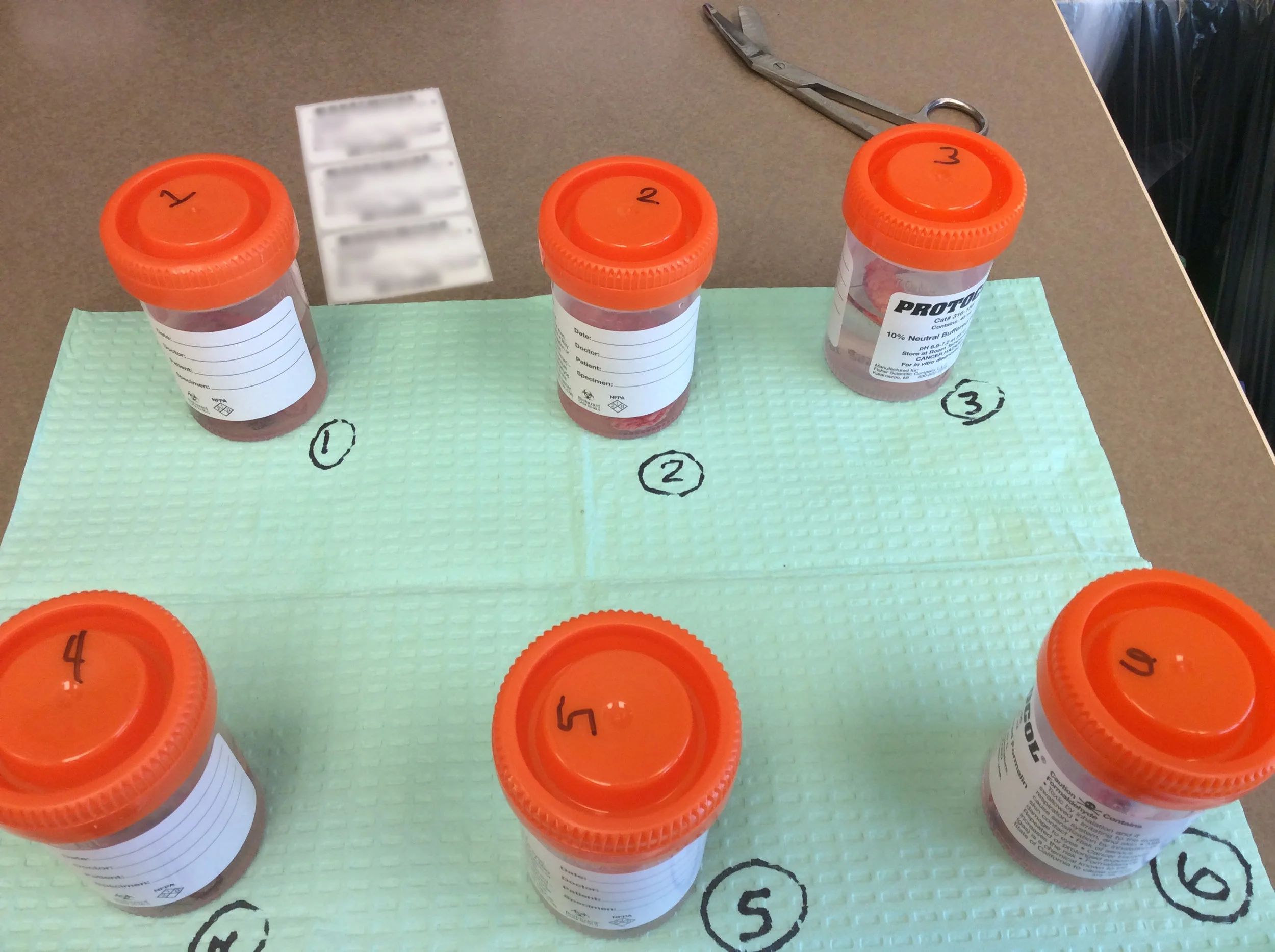
Most cancer research depends on enrolling large groups of patients, which is difficult for a disease as rare as EMPD. The TRACER Initiative at Fred Hutchinson Cancer Center in Seattle takes a different approach. It learns from one patient at a time: a portion of fresh tissue from a biopsy or surgery is tested directly against a panel of drugs, and machine learning extends those results to predict how that tumor might respond to hundreds of other approved medicines. Collection kits, shipping, and support are provided, and there is no cost to take part. Read More →
Mayo Clinic: Prospective Registry of Gynecologic Patients With Extramammary Paget's Disease Study
The Mayo Clinic is currently recruiting women with vulvar Extramammary Paget's Disease for an EMPD study. This includes EMPD of the vulva, vagina or perianal EMPD. The 32-year study will allow physicians to better understand EMPD. The researchers also want to learn more about the microorganisms (microbiome) that live on or near the areas of skin affected by EMPD, in order to better understand this condition. Tumor tissues will be obtained in order to perform tumor molecular profiling to identify targetable somatic mutations in EMPD. This EMPD study is for women only.… Read More →
(Updated September 2026)